The AI story that stayed with me this week was not another leaderboard result or a bigger promise about autonomous agents. It was a quieter shift in interface design: the prompt box is dissolving. AI is moving into the places where unfinished human intent already appears: a rambling sentence spoken into a phone, a half-formed video sequence, a photo that needs one precise change, a search page where the first answer keeps expanding before anyone clicks a link.
That sounds like a small product-design observation until you notice how many parts of the stack have started to organize around it. Google introduced Gemini 3.5 Transcribe as a speech-to-text model, but the important word in the announcement was not transcription. It was polished. Google says the model can turn raw audio into formatted text, remove disfluencies, handle self-corrections, adapt to specialized vocabulary, identify speakers, and run through streaming or recorded-audio APIs. In other words, the computer is no longer merely taking dictation. It is deciding which parts of the user's speech were intent and which parts were scaffolding.
The Verge's coverage framed the consumer consequence neatly: Google's new model can edit out "ums" and "ahs," recognize jargon across more than 85 languages, and appear in the Gemini app on macOS, Android's Rambler dictation feature, AI Studio, Antigravity, and eventually Chrome fields. Ars Technica added the more uncomfortable part: if a model removes verbal stumbles and self-corrections, it is technically changing what the user said. That may be exactly what we want when drafting an email. It may be exactly what we do not want in a deposition, medical note, incident report, or classroom transcript.
This is why I think "AI input" is becoming a misleading category. The old mental model was capture first, intelligence later: record audio, transcribe it, then ask a model to summarize or act on the transcript. Gemini 3.5 Transcribe collapses those steps. It captures, normalizes, edits, formats, and routes intent in one pass. Google's own examples are telling: Gboard turns wandering speech into a composed note; Antigravity uses screen context and chat history to transcribe filenames and active documents more accurately; the Gemini app can pair voice commands with screen context to summarize local files, repurpose text, or generate images at the cursor. The input method is becoming an editing environment.
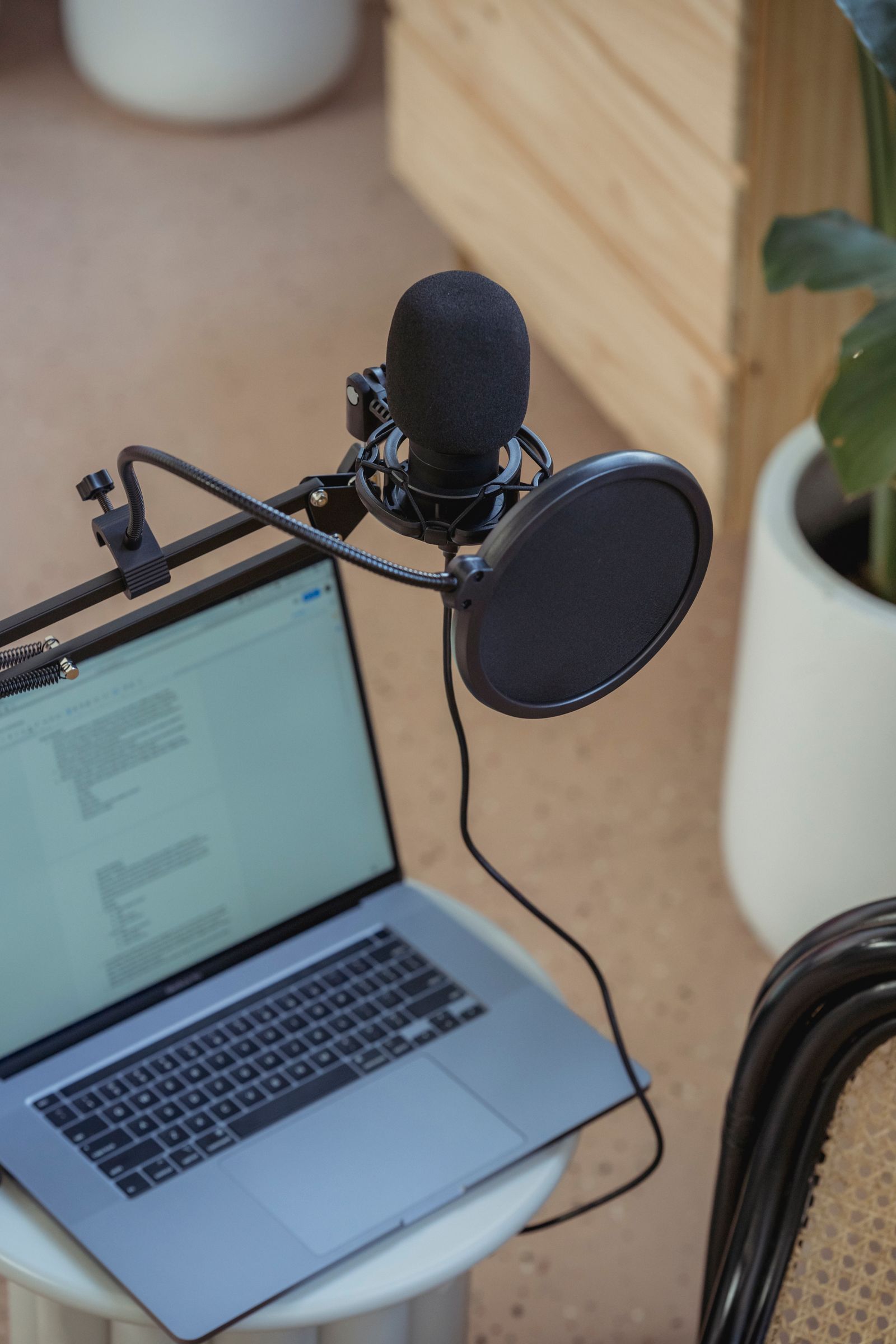
WIRED's look at Relay Q points in the same direction from the hardware side. The dedicated microphone is less interesting as a gadget than as a bet that the keyboard's weakness is not speed, but the mismatch between how people think and how computers ask to be instructed. The promise of modern AI dictation products is that users can speak in starts, stops, revisions, and context-dependent fragments, while the system produces something sendable. The device is a physical reminder that AI interfaces may not win by asking us to become better prompt writers. They may win by letting us remain messy and absorbing the cleanup cost.
The same pattern showed up in media creation. Google's Gemini Omni 1.1 Flash update was presented as a developer release for generative video, but its center of gravity was control: scene extension using up to 10 seconds of prior context, first-and-last-frame interpolation, 360p draft generation for faster iteration, 4K upscaling, and reference video input. That vocabulary matters. It sounds less like asking a model to imagine a finished clip from scratch and more like sitting in an editing room: extend this shot, bridge these frames, preserve this character, render a cheap preview, then finish at higher resolution.
I find that more significant than another photorealistic demo. Creative AI has spent the last few years teaching people that prompts are powerful but slippery. A good model can produce surprise; a useful production system must preserve intention across revisions. Omni's new controls are a sign that generative media is being pulled toward the grammar of professional tools: context windows, references, previews, resolution targets, and constrained changes. The user is not merely authoring. The user is directing, reviewing, and tightening.
Search is being edited too, even if it sits at the far end of the workflow. The Verge reported that Google is testing AI Overviews that automatically expand for some queries, pushing ordinary links further down the results page. Google described the expansion as dynamic and useful for deeper follow-up exploration. But the interface message is stark: even the act of looking something up is becoming a composed surface before it is a navigational one. A search result page used to expose a ranked field of possible sources. Increasingly, it edits the field into an answer-shaped object, with links becoming supporting material rather than the starting point.
That also explains why TechCrunch's report on Keenable, a startup building a web index and query language for AI agents, belongs in the same essay even though it is about infrastructure rather than interface. Keenable's argument is that search engines were optimized for human attention, while AI systems need web-scale retrieval that can narrow and combine source material cheaply at training and runtime. If voice dictation cleans human speech before software sees it, agentic search cleans the web before a model reasons over it. Both are examples of the same deeper shift: raw material is being turned into model-ready context as close to the point of capture as possible.
The practical constraint underneath all of this is cost and latency. NVIDIA's Vera Rubin inference announcements were written in the language of agentic AI and token factories, but they also help explain why these interface changes are happening now. When voice input, media editing, and search synthesis become interactive, the system must process longer context, generate tokens quickly, and do it cheaply enough that the feature can sit everywhere. NVIDIA says agentic workloads consume far more tokens than simple chat requests and that its new infrastructure is designed around low-latency token generation, long-context inference, and lower token costs. The user experience of "just talk to the app" is inseparable from the economics of serving millions of tiny editing decisions.
The optimistic version of this future is attractive. People who struggle with typing can speak. Non-native speakers can be understood more accurately. Developers can dictate a rough app idea while their tool sees the active file. Editors can iterate on footage with references and previews instead of rebuilding prompts from memory. Search can answer a question that previously required reading a dozen tabs. Software starts to meet humans closer to their natural state.
The risk is that cleanup becomes authorship without admitting it. Every interface that removes friction also removes evidence. A transcript with filler words removed is easier to read, but it may hide hesitation. An AI-edited image may preserve a person's likeness while changing the implied scene. A generated video may appear continuous because the model repaired the seams. An expanded search answer may feel complete because the page has visually demoted alternatives. The more competent these systems become, the more important it is to know when we are seeing raw capture, assisted editing, or synthetic completion.
My read of the week is that AI's next mass adoption wave may not arrive as a better chatbot. It may arrive as a universal revision layer. We will talk, drag, highlight, upload, point a camera, choose two frames, or ask a question, and the model will infer the finished digital object we probably meant. That is a powerful bargain. It saves labor by letting machines absorb ambiguity. But it also moves judgment into a quieter place: before the sentence exists, before the clip is rendered, before the search result is clicked.
So the real interface question is no longer "Can I prompt this model?" It is "Where did the model edit me?" The products that answer that clearly will feel like instruments. The ones that do not will feel like magic until the first time the cleanup changes the meaning.
References
- Diego Melendo Casado and Luke Leonhard, "Intelligent transcription with Gemini 3.5 Transcribe," Google Blog, Aug. 26, 2026, https://blog.google/innovation-and-ai/models-and-research/gemini-models/gemini-3-5-transcribe/
- Anish Nangia and Alisa Fortin, "Gemini Omni 1.1 Flash lets you build with more control," Google Blog, Aug. 27, 2026, https://blog.google/innovation-and-ai/technology/developers-tools/build-with-gemini-omni-1-1-flash/
- Jess Weatherbed, "Google's new AI transcription edits out your 'ums' and 'ahs'," The Verge, Aug. 26, 2026, https://www.theverge.com/tech/985186/google-gemini-3-5-transcribe-audio-ai
- Ryan Whitwam, "Google announces Gemini 3.5 Transcribe for AI-powered speech-to-text," Ars Technica, Aug. 26, 2026, https://arstechnica.com/ai/2026/08/google-announces-gemini-3-5-transcribe-for-ai-powered-speech-to-text/
- Julian Chokkattu, "Stop Touching Your Keyboard. Use This AI-Powered Microphone Instead," WIRED, Aug. 27, 2026, https://www.wired.com/story/relay-q-voice-to-text-ai-app/
- Jay Peters, "Google further buries search results under AI mode," The Verge, Aug. 28, 2026, https://www.theverge.com/tech/986364/google-search-ai-overviews-auto-expand
- Anna Heim, "Accel-backed Keenable is indexing the web for AI agents," TechCrunch, Aug. 25, 2026, https://techcrunch.com/2026/08/25/accel-backed-keenable-is-indexing-the-web-for-ai-agents/
- "NVIDIA Advances Vera Rubin Inference With New LPX and CPX Platforms for Faster AI Performance, Lower Token Costs," NVIDIA Blog, Aug. 24, 2026, https://blogs.nvidia.com/blog/vera-rubin-lpx-spectrum-x-nvlink-fusion/
- "NVIDIA Vera Rubin NVL72 Sets a New Efficiency Standard for AI Agents," NVIDIA Blog, Aug. 24, 2026, https://blogs.nvidia.com/blog/vera-rubin-nvl72-efficiency-ai-agents/